Why “Fresh” Doesn’t Mean the Same Thing at Every Meat Shop — And How to Protect Yourself
The word “fresh” is the most overused and least regulated claim in the fish and meat market. Every seller uses it. Not every seller means the same thing by it. Understanding the gap between what “fresh” means to a responsible supplier and what it can sometimes mean to an unscrupulous one is one of the most important things a buyer in Guwahati can know. This is not a comfortable article to write, but it is a necessary one.
The Problem With “Fresh”
At a basic level, freshness has a time component. Fish caught in the morning and sold by afternoon is fresh. Fish caught the previous day, refrigerated overnight, and sold the next morning occupies a grey zone — technically still consumable, but meaningfully different in flavour and texture. Fish that has been chilled on ice for two or three days and relabelled for the market is not fresh by any honest standard, even if it passes a cursory smell test. The challenge for buyers is that visual cues alone — which most people rely on — can be misleading, particularly with fish that has been packed in ice or stored in controlled conditions.
The Formalin Issue — What Buyers Should Know
Formalin is a solution of formaldehyde in water used industrially as a preservative and disinfectant. It is completely prohibited for use in food in India under the Food Safety and Standards Authority of India (FSSAI) regulations. Yet investigations and food safety raids in various Indian cities — including in Northeast India — have periodically found formalin traces in fish, used to extend shelf life and mask signs of deterioration.
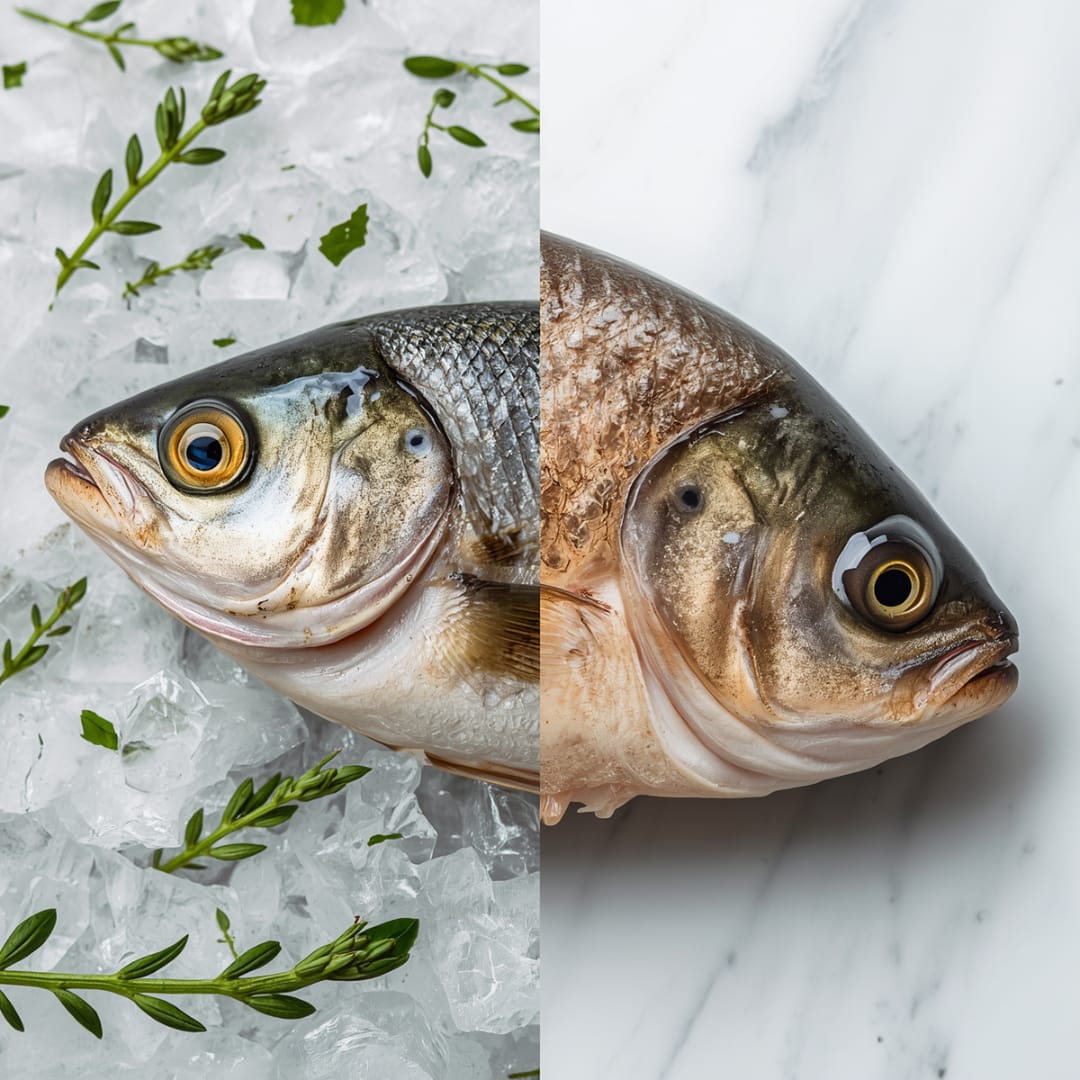
Formalin-treated fish shows several identifiable signs. The flesh is unusually firm — almost rigid — even when the fish has been dead for some time. The surface has an artificially clean, almost plastic-like appearance. When placed in water, formalin-treated fish may cause the water to turn slightly milky. The fish will also have very little smell — formalin masks the natural odour of deterioration, which is why a fish with virtually no smell is not automatically a sign of freshness. If you encounter fish at a stall that seems suspiciously firm, has no smell at all, and has an unnaturally clean appearance, ask questions. A legitimate seller will have no problem explaining their sourcing.
Signs of Genuinely Fresh Fish
Fresh fish that has not been chemically treated shows the following natural signs: Clear, bright, slightly bulging eyes; Vivid red gills with no sliminess; A mild, clean, river or ocean scent (not odourless, not fishy); Firm flesh that springs back when pressed; Shiny, tight skin with a clear, thin mucus layer. Truly fresh fish looks and feels like it was recently alive — because it was.
What a Responsible Supply Chain Looks Like
At Minbury, the supply chain is built around eliminating every point where quality can compromise. Fish arrive at Minbury’s facility each morning directly from local fisheries and are placed into Recirculatory Aquaculture System (RAS) tanks where they remain alive until processing. They are never stored in ice for extended periods before sale. Processing — cleaning, cutting, and vacuum packing — happens the same morning using RO (reverse osmosis) water, which is free of the contaminants present in regular tap water. The entire cold chain from processing centre to delivery is maintained at controlled temperatures. This process is traceable. Minbury knows when each fish arrived, which fishery it came from, and when it was processed.
Your Rights as a Buyer
Under FSSAI regulations, you have the right to ask any food seller about the source and handling of their products. You have the right to report suspected food adulteration to the FSSAI helpline (1800-112-100), which is free and available across India. Informed buyers are the best enforcement mechanism the food system has. Ask questions, use the checks in this guide, and choose suppliers who can tell you exactly where your food came from.
Frequently Asked Questions
What is formalin and is it allowed in fresh fish?
Formalin is a hazardous preservative completely banned in food. Minbury enforces a strict zero-tolerance policy against preservatives, keeping all stock alive until processing. Verify our freshness and safety standards.
How does Minbury guarantee formalin-free fish?
Our fish are kept in recirculating aquaculture system (RAS) tanks and processed the same morning of delivery. Browse preservative-free fish on Minbury.
What are the physical warning signs of formalin-treated fish?
Formalin-treated fish is unnaturally rigid, odorless (since decay smells are masked), and has a glossy, synthetic appearance with greyish gills.
Is tap water safe for washing raw meat and fish?
No, raw tap water can introduce chlorine or local bacterial contaminants. Minbury washes all products in purified, food-safe RO (Reverse Osmosis) water.
All local fish, premium meats, duck, and farm fresh eggs are sourced clean at 4 AM and delivered to your doorstep within 60 minutes.